Pitch Deck for the Cognitive Science Fellowship Program
To understand how cognitive mechanisms influence fear in interactive media, I conducted a research project under a PhD mentor in the de Sa Lab, analyzing horror game design patterns to develop a framework for quantifying player emotion.
Research
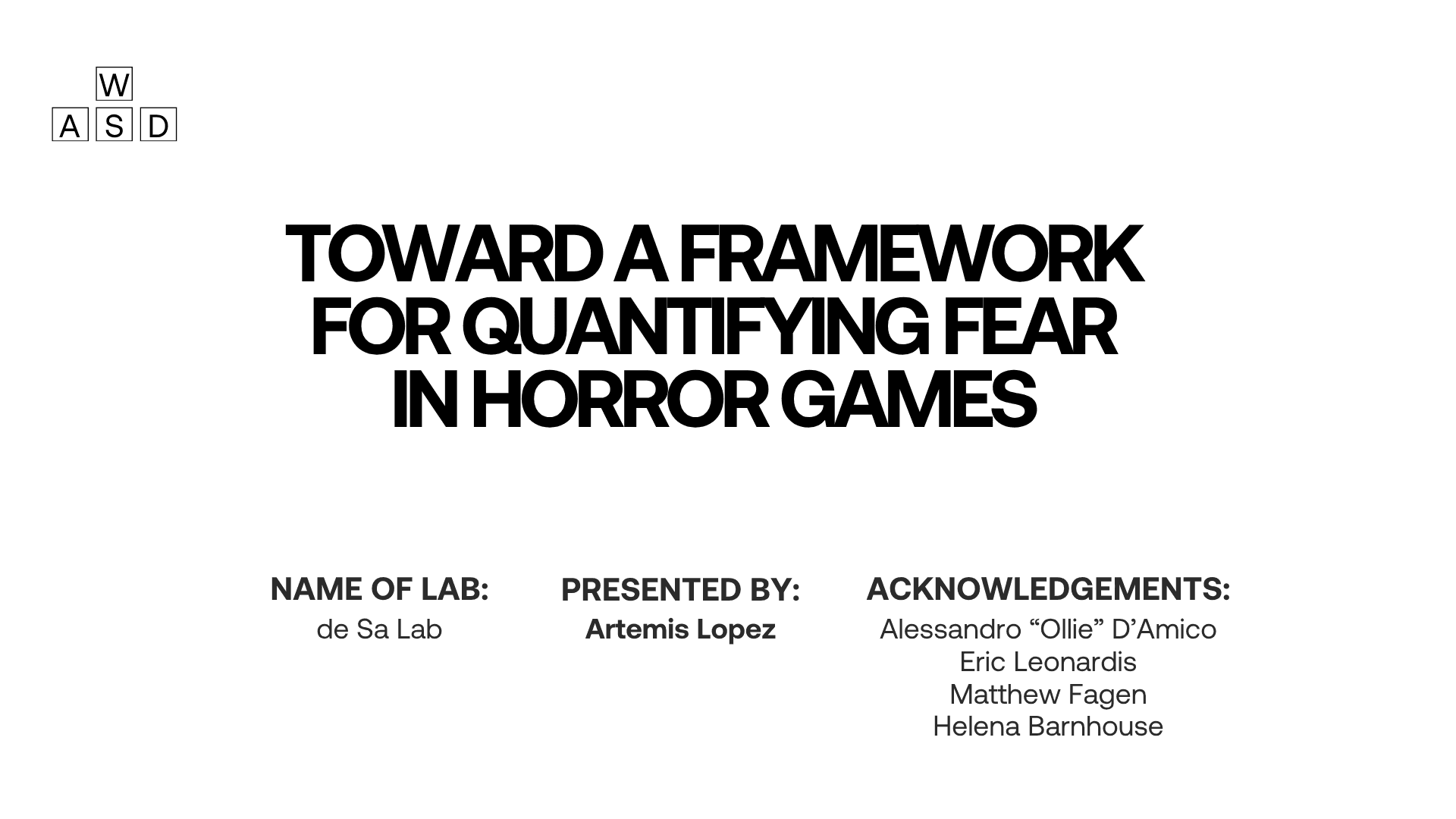
Summary
Role: Independent Researcher
Affiliation: Virginia de Sa Lab at UC San Diego
Timeline: 9 weeks (2025)
Tools: Figma, Canva, Game Analysis, Literature Review, Cognitive Modeling
Audiences: UC San Diego Cognitive Science Scholars Symposium
As part of the Cognitive Science Summer–Fall Fellows Program at the University of California, San Diego (UC San Diego), I conducted an independent research project within the de Sa Lab under the guidance of Alessandro "Ollie" D'Amico, focused on developing a framework to quantify fear in horror video games.
Through comparative analysis of popular titles such as Poppy Playtime (2024), Five Nights at Freddy’s (2021), Alien: Isolation (2014), and Slender: The Eight Pages (2012), the project examined how game design mechanics provoke emotional responses, specifically, fear, through violations of player expectations, loss of control, and environmental uncertainty.
Background
Despite fear being a core design feature in horror game design, there is no standardized framework for measuring and comparing fear responses in humans across titles. Existing research focuses on narrative or visual cues but rarely integrates player cognition and agency. Fear events in humans are often studied retrospectively from a psychological perspective rather than a cognitive science perspective.
This project sought to identify mechanical and perceptual features that contribute to fear and establish a scalable structure for future experimental design, bridging cognitive theory and interactive media.
Research Goals
Identify the unique mechanical and perceptual features of horror games.
Evaluate these features through case studies of modern and classic titles.
Narrow the scope to define measurable variables for experimental analysis.
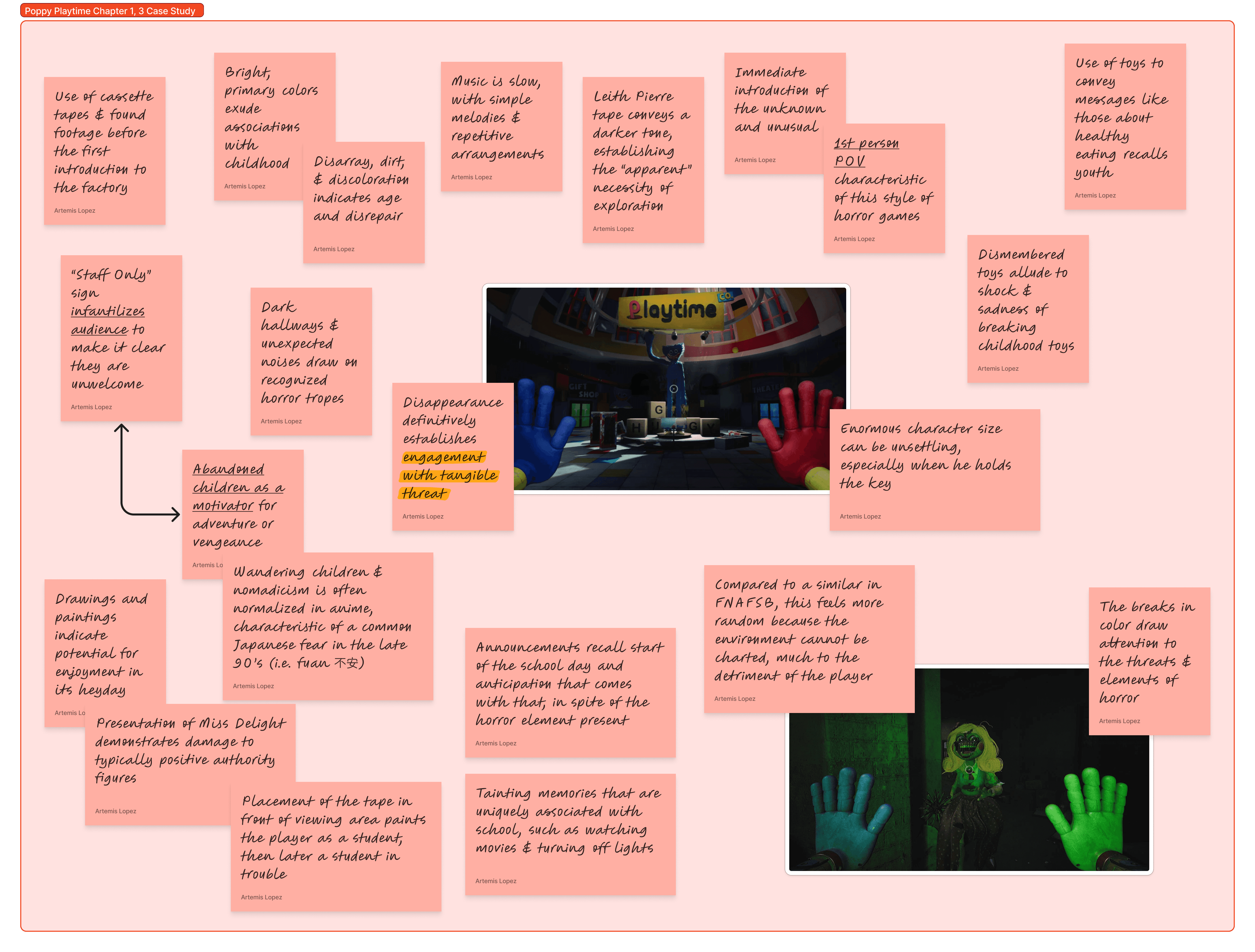
Case Study of Poppy Playtime: Chapter 1, 3 - A visual breakdown of horror design elements, environmental storytelling, and player engagement strategies, examining how childhood motifs and psychological cues evoke fear and nostalgia.
Key Findings
Through systematic observation and literature review, I categorized fear-inducing elements into four recurring cognitive mechanisms. Each reflects how player expectations and control shape the perception of fear:
Expectation Violations: When anticipated events are subverted (e.g., familiar spaces behaving unpredictably).
Loss of Fidelity: When graphics or mechanics degrade without a narrative explanation, it creates unease.
Loss of Agency: When players temporarily lose control, reinforcing vulnerability and helplessness.
Navigation Pressure: When spatial uncertainty and limited mobility amplify tension and disorientation.
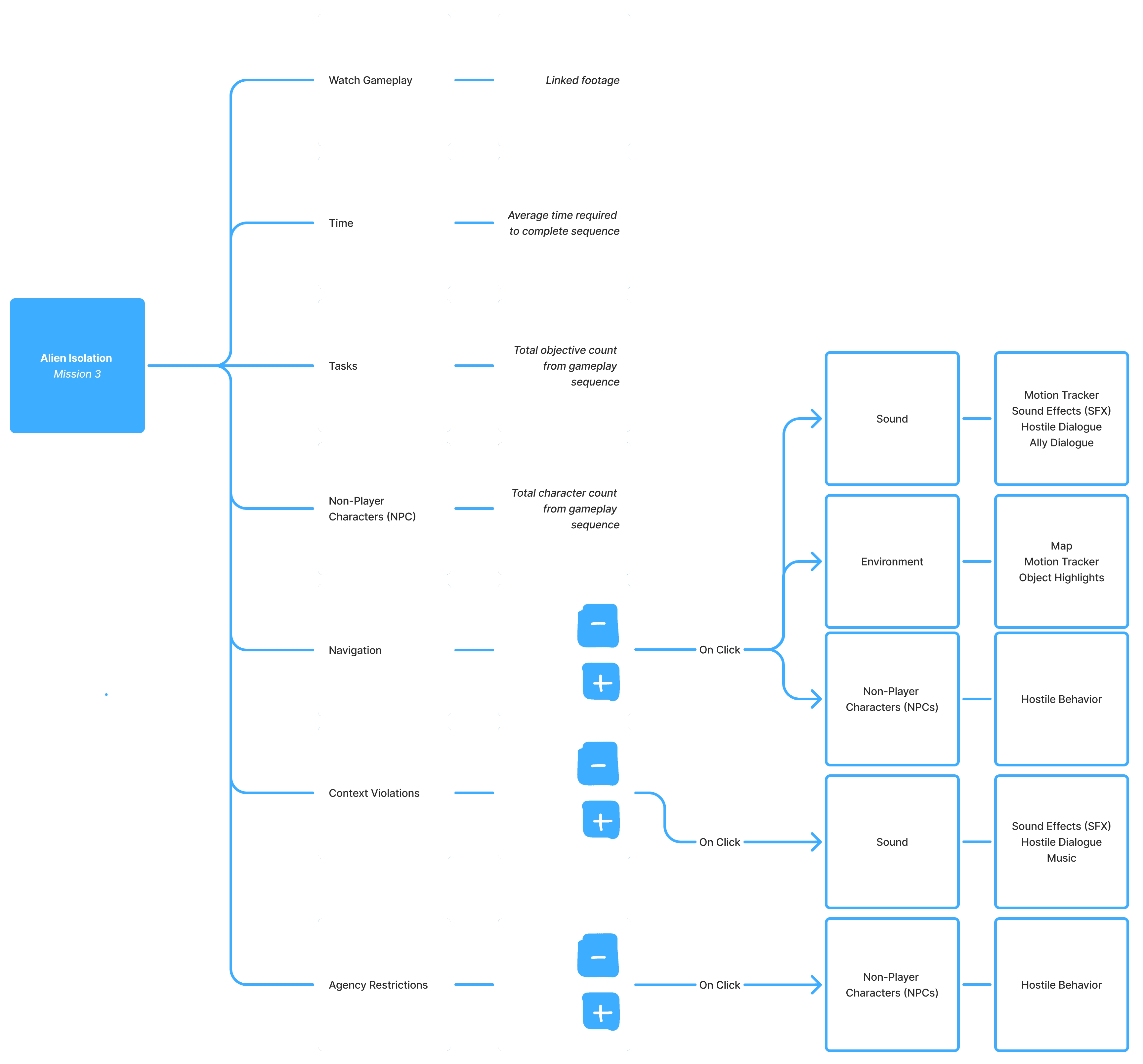
A breakdown of Alien: Isolation (Mission 3) illustrating how gameplay mechanics, environmental cues, and player agency interact to quantify fear within the proposed cognitive framework for horror game analysis. Note that "Context Violations" refers to "Expectation Violations."
Framework Development
Building from these categories, I proposed a hierarchical model that organizes player experience into levels of engagement:
Ultimate Goal: Survival or task completion.
Objectives: Intermediate milestones communicated by the game.
Explicit Tasks: Observable actions (e.g., collect items, avoid enemies).
Implicit Tasks: Unspoken behavioral adjustments players make to mitigate perceived threat.
This structure allows researchers to analyze how fear modifies cognitive performance—such as attention, decision-making, and reaction time—across gameplay contexts.
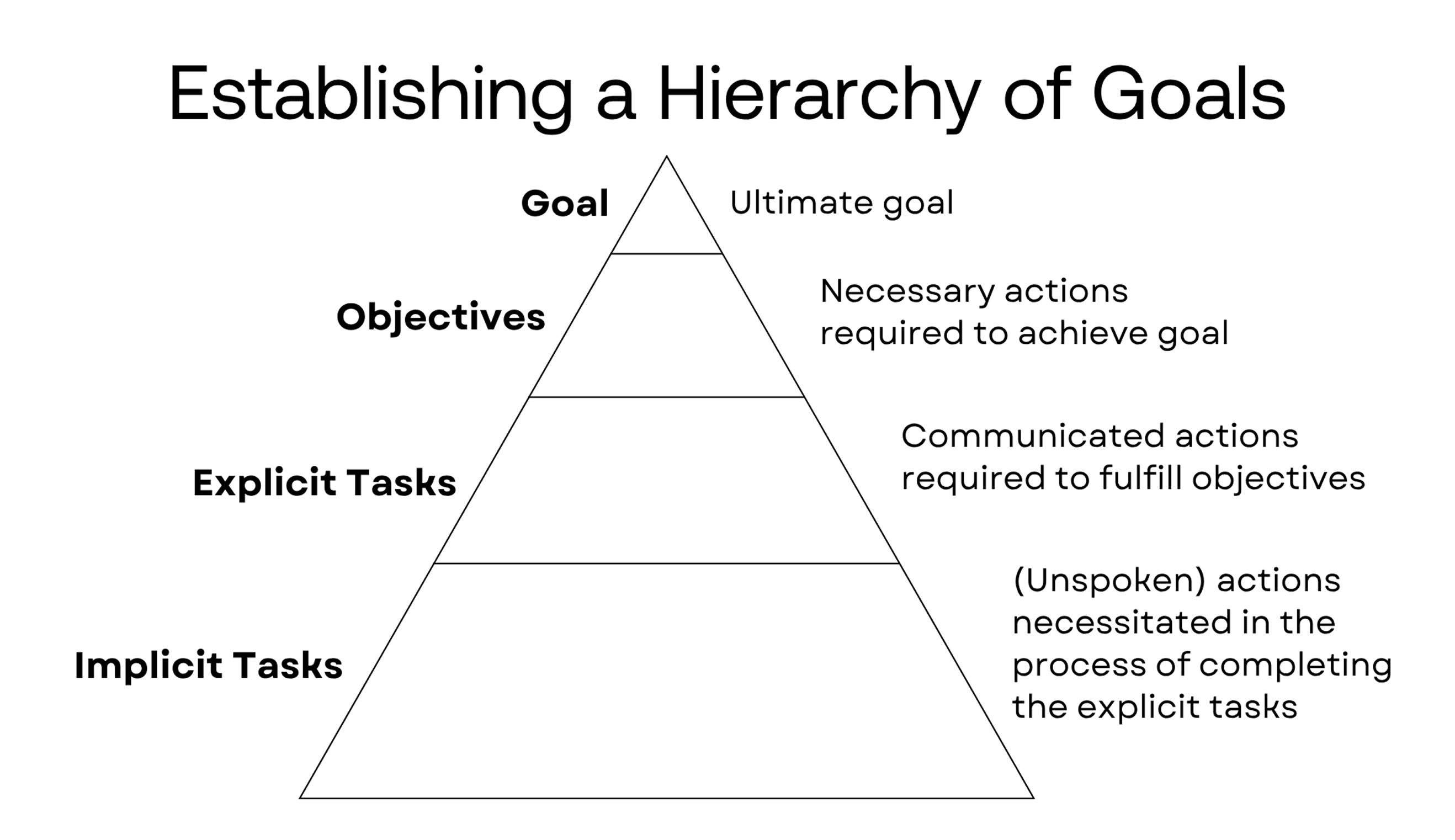
Hierarchical model prototype illustrating how goals, tasks, and player agency interact to shape fear responses across gameplay contexts.
Next Steps
The project concluded with the development of a research roadmap outlining future experimental implementation:
Background: Complete a comprehensive literature review of fear quantification in interactive media.
Methods: Define measurable parameters (e.g., heart rate, decision latency, pupil dilation).
Experiment: Construct prototype horror scenarios for data collection.
Analysis: Evaluate cognitive and physiological responses to identify correlations between design features and perceived fear intensity.
The Final Deliverable
The project culminated in a research slide deck presented to faculty and peers in the Cognitive Science Summer–Fall Fellows Program. The presentation summarized the literature review, case study findings, and the proposed hierarchical framework for quantifying fear in horror games.
The deck visually outlined four key fear mechanisms—expectation violation, loss of fidelity, loss of agency, and navigation pressure—and demonstrated how they could be analyzed within an experimental framework. This final deliverable served as both a summary of the research process and a conceptual foundation for future lab experimentation on emotion modeling in interactive media.
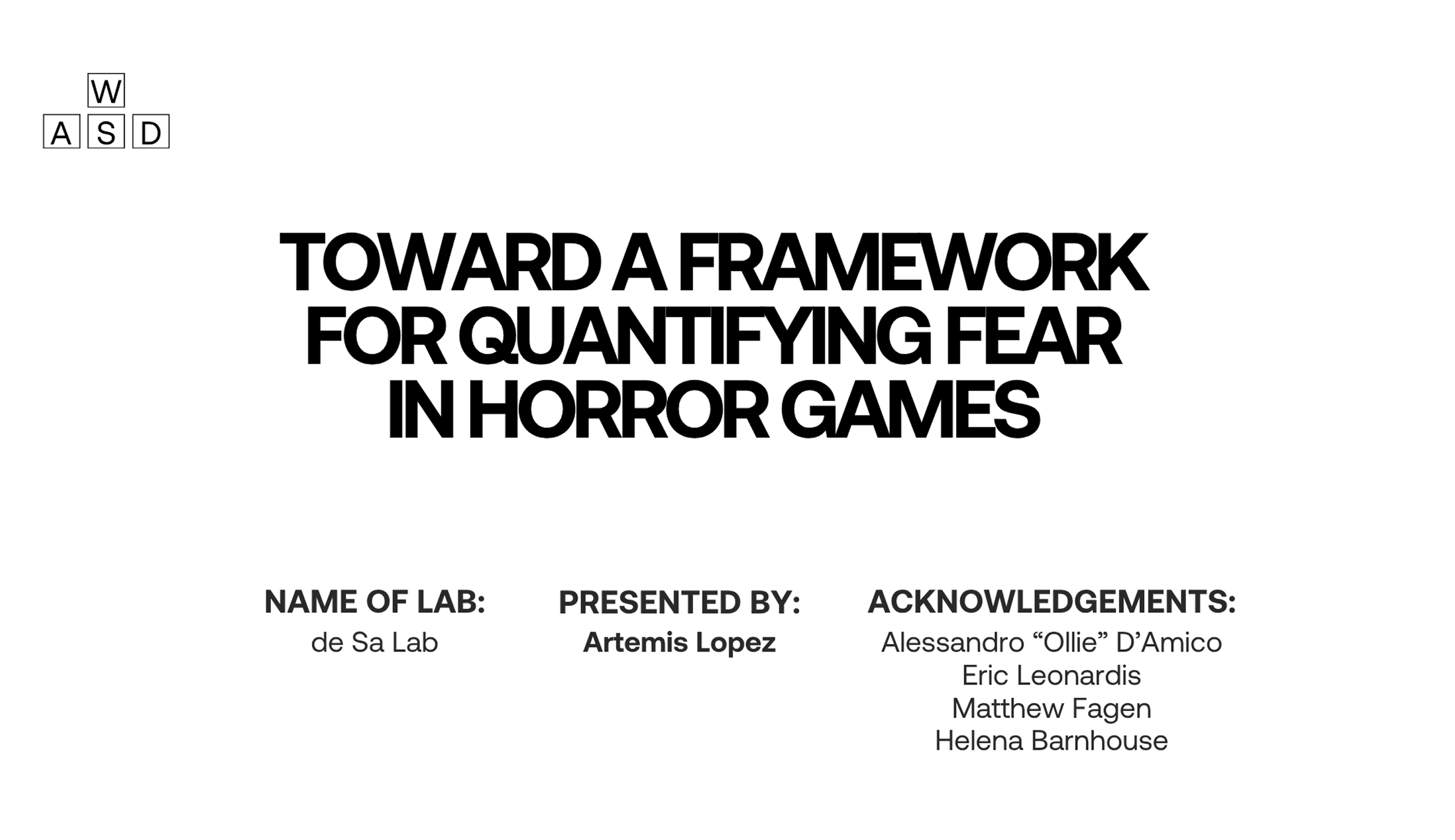
The final slide mock-ups, with integrated gameplay screens, UI interactions, and pitching visuals in a cohesive narrative.
Impact and Reflection
This project laid the foundation for an interdisciplinary approach to understanding emotional engagement in digital environments. By framing fear as both a psychological state and a mechanical output, it advanced a structured method for analyzing complex player experiences.
The research strengthened my ability to translate abstract cognitive principles into applied design frameworks—bridging neuroscience, human-computer interaction, and creative media.
“Quantifying fear isn’t about measuring emotion: it’s about understanding how design decisions make us feel human.”
