AI Research on Healthcare Data Privacy for UC San Diego Federal Government Relations
To examine how current healthcare data policies shape the ethical integration of AI, I conducted an independent research and design project that translated complex legislation into accessible public communication.
Research
Graphic Design
Summary
Role: Lead Researcher and Designer
Team: Faculty Advisors (2), Government Relations Team Leads (2), Researcher (Me)
Timeline: 4 weeks (2025)
Tools: Figma, Google Workspace
Audiences: UCDC Student Advocacy and Research Forum (Winter 2025), UC San Diego Mentored Undergraduate Research and Applied Learning Symposium (MURALS) (2025)
AI on the Prize was a four-week independent research and design project conducted through the University of California, Washington Program (UCDC). The project examined how emerging artificial intelligence systems intersect with patient privacy, healthcare legislation, and ethical data governance in the United States.
As the lead researcher and designer, I conducted a structured literature review, synthesized interdisciplinary findings, and translated complex policy and technical concepts into a policy-oriented informational poster. The goal was to make AI-driven healthcare risks understandable to non-expert audiences while advocating for greater transparency and accountability in medical AI systems.
The Problem
Artificial intelligence is increasingly embedded in healthcare workflows, from diagnostic tools to insurance claim processing, yet the systems governing patient data remain fragmented and difficult to interpret.
While the Health Insurance Portability and Accountability Act (HIPAA) establishes a baseline for privacy protection, it does not adequately address AI-specific risks such as algorithmic bias, opaque decision-making, and secondary data usage without patient consent.
This project explored the following questions: "What policies currently exist to safeguard medical data in AI systems?", "Where do current frameworks fail to ensure transparency and accountability?", and "How can design make these systems more understandable to the public?"
Challenges Identified:
Lack of unified AI governance within healthcare legislation
Limited patient understanding of how AI uses their data
Gaps in accountability within existing privacy laws (HIPAA, CCPA, and CPRA)
High complexity in translating legal and technical systems into accessible language
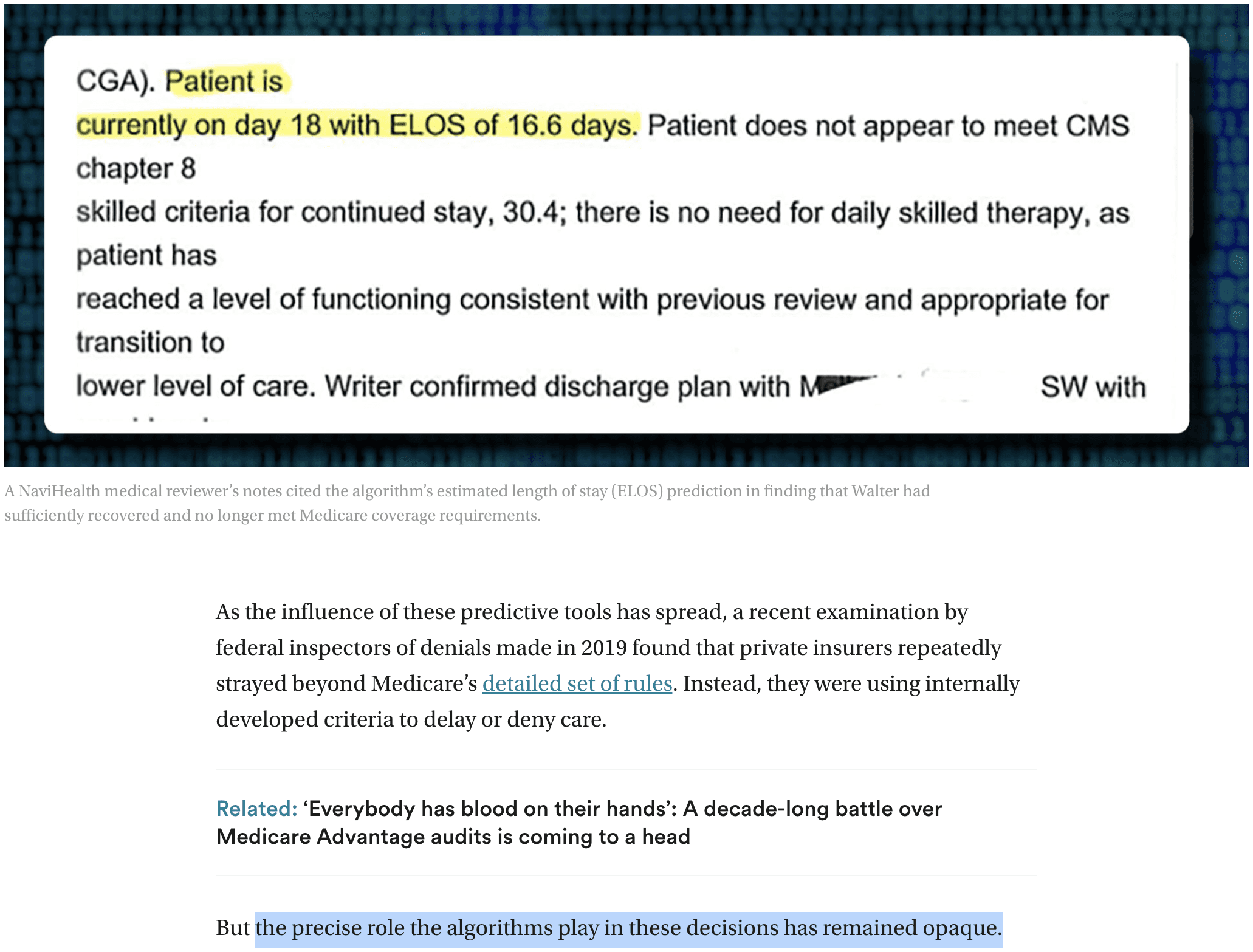
This image depicts the output of NaviHealth's AI algorithm, employed by UnitedHealth Group, which was used to deny continued coverage for patient care.
Research and Methodology
To address these questions, I synthesized interdisciplinary sources spanning policy, data ethics, and investigative journalism.
Research Methods:
Policy Review: Analysis of federal, state, and emerging AI-specific regulations
Case Studies: Examination of AI-driven claim denial systems (e.g., UnitedHealthcare) and their real-world impact
Content Analysis: Evaluation of global data privacy frameworks to identify transferable practices
Qualitative Coding: Categorization of recurring themes, including bias, transparency, consent, and enforcement
This process revealed a consistent breakdown between how AI systems operate and how their decisions are communicated to patients and providers.
Design Approach
The design phase aimed to translate dense policy findings into an accessible visual artifact that could educate both policymakers and the public.
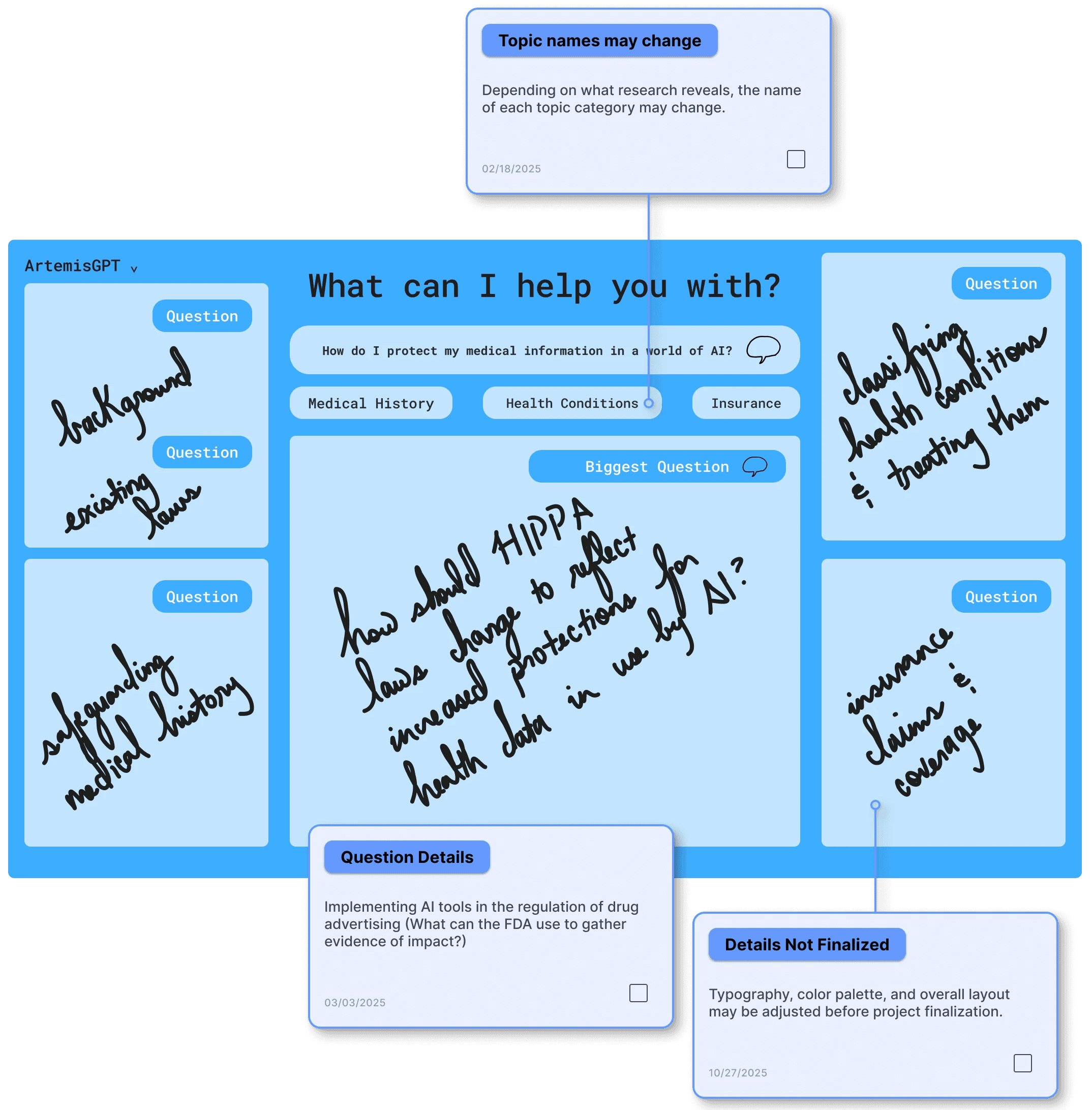
Using Figma for layout design and Google Workspace for content synthesis, I designed a poster that guided viewers through four key sections:
The expanding role of AI in healthcare
Ethical and legal challenges
Current and proposed legislative efforts
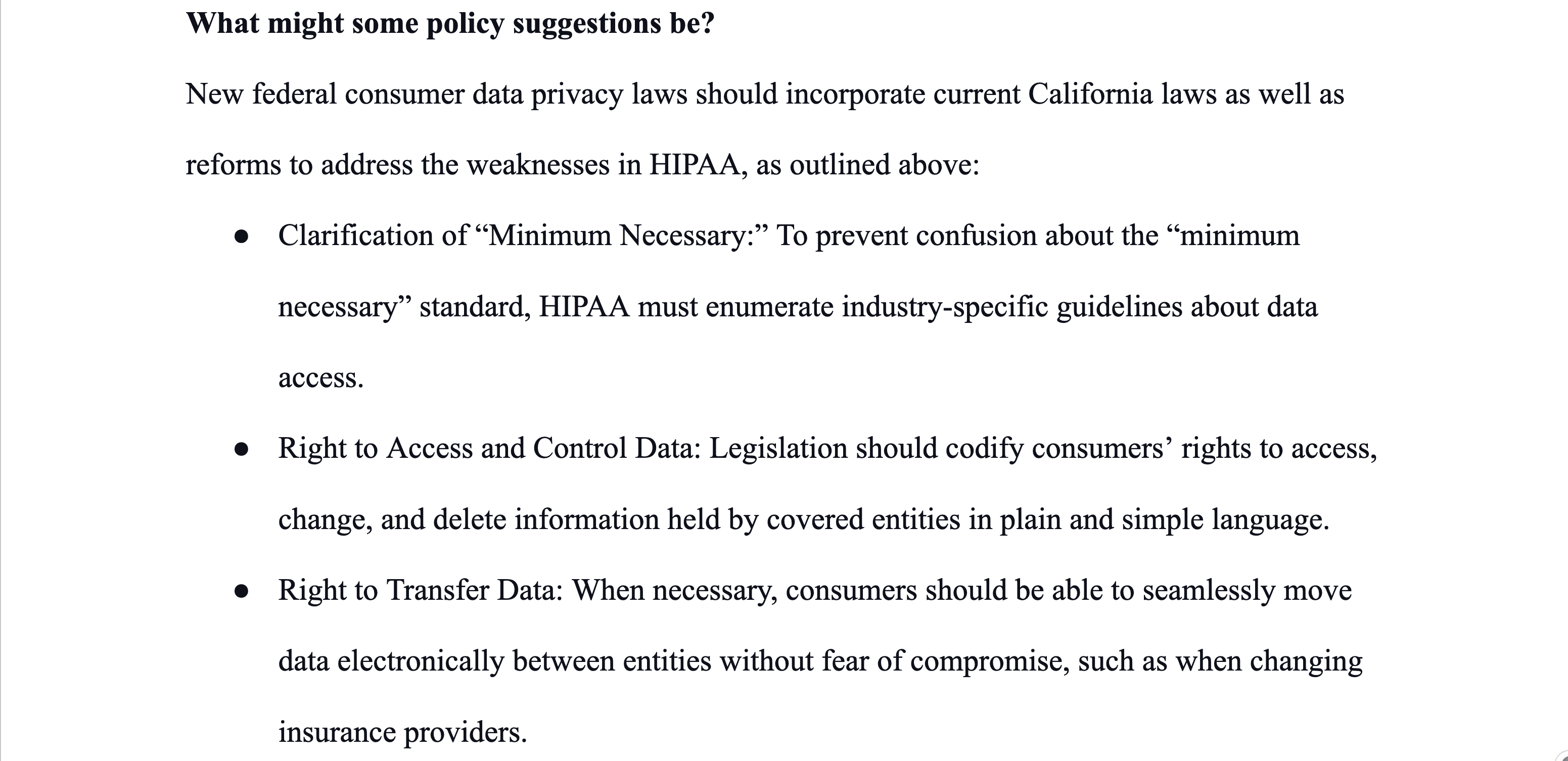
Policy recommendations for ethical AI integration
To improve comprehension, the content was organized using a strong information hierarchy, color-coding was used to group related concepts and guide navigation, the typography and spacing were designed for readability and accessibility, and the visual structure emphasized clarity for time-constrained audiences.
Findings
U.S. data privacy laws inadequately address AI-specific healthcare risks.
Patients and practitioners both desire more transparency in AI-driven decisions.
Visual communication aids comprehension of complex policy topics.
There is growing potential for design to bridge the gap between technical governance and public understanding.
The Final Design
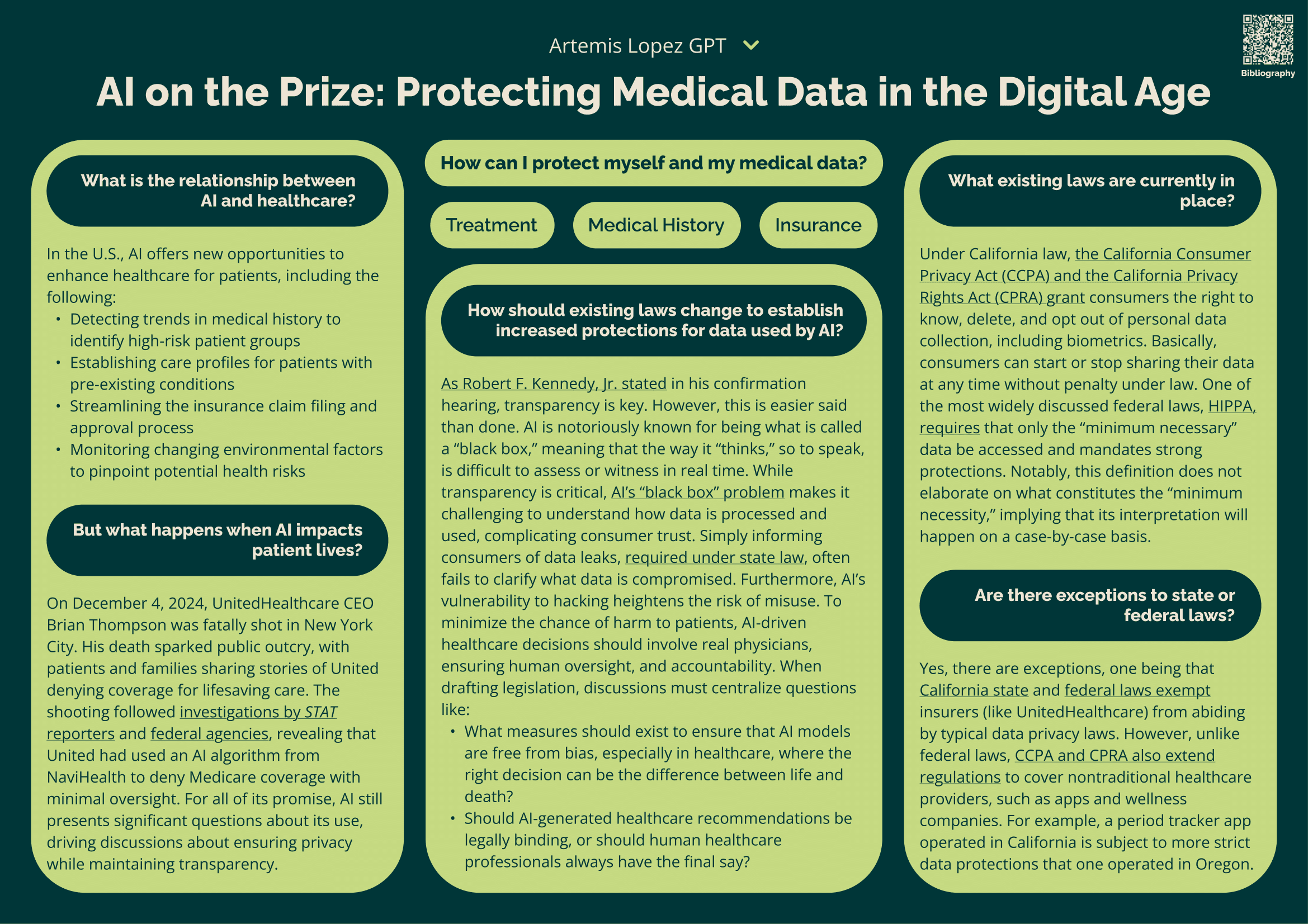
The final poster, AI on the Prize: Protecting Medical Data in the Digital Age, presents a structured synthesis of policy research, ethical analysis, and visual communication.
Through deliberate use of hierarchy, layout, and visual grouping, the poster enables viewers to:
Understand how AI is currently being used in the healthcare space
Identify key risks related to privacy and decision-making
Recognize gaps in existing state and national legislation
Engage with proposed directions for more transparent and accountable systems
At both the UCDC Student Advocacy and Research Forum and the UC San Diego Symposium, the design allowed audiences to quickly connect abstract policy issues to real-world healthcare outcomes.
Impact and Reflection
This project demonstrates how UX and information design can extend beyond digital interfaces to improve understanding in complex, high-stakes domains.
By translating policy into accessible visual language, the work highlights the role of design in making systems of power more transparent and navigable.
Outcomes:
Developed a research-driven framework for communicating ethical AI in healthcare
Identified key legislative gaps impacting patient data protection
Demonstrated the effectiveness of visual systems in policy education
Takeaways:
Visual communication can make policy research accessible and actionable.
Data ethics must be integrated into every stage of the design process.
Collaboration between designers and policymakers enhances ethical innovation.
Accessibility and clarity should anchor all information design decisions.
“Design can make an impact beyond aesthetics; it’s about making systems of power understandable.”
